If you are thinking about buying your first rental in Clovis, you might be wondering whether this is a simple cash-flow market or a place that needs a more careful strategy. The honest answer is both. Clovis can offer steady rental demand and approachable price points, but it also rewards investors who understand local housing stock, military-driven moves, and New Mexico landlord rules. Let’s dive in.
Clovis Is Not a Pure Renter Market
Clovis is a mostly owner-occupied market, which shapes how rentals perform. U.S. Census QuickFacts shows a 62.1% owner-occupied housing unit rate in Clovis and 62.7% in Curry County. That means rentals are an important part of the market, but they do not dominate it.
For you as a new investor, that matters because demand tends to be more targeted than broad-based. You are not stepping into a market built around large apartment corridors or constant high-rise leasing. Instead, you are looking at a more local, neighborhood-based rental market where property type, condition, and price point matter a lot.
Rental Demand Comes From Workforce Households
A big share of Clovis renters fall into lower-to-middle rent ranges. The city’s affordable-housing plan shows that in 2022, 49.2% of occupied rental units were below $1,000 per month, and another 27.1% were between $1,000 and $1,499. Only a small share rented above $2,000.
That tells you something important right away. In Clovis, the strongest demand is often for practical, well-kept housing that fits workforce budgets, not luxury product. If you are buying your first investment, that can be a useful guardrail when you estimate rent, renovations, and tenant demand.
The same city plan identified renter households earning 80% to 100% of area median income, with some of those households still cost-burdened. In plain terms, there is meaningful demand from renters who need solid, reasonably priced housing and who may be sensitive to rent increases.
Cannon AFB Is a Major Demand Driver
One of the clearest local influences on the Clovis rental market is Cannon Air Force Base. MilitaryINSTALLATIONS notes that the Cannon community includes more than 20,000 people, making military-related housing demand a major factor in the area.
For investors, that means turnover patterns may look different than in a market driven only by long-term local households. Military relocations can create recurring demand for clean, ready-to-rent homes with straightforward lease terms and responsive management.
The same housing guidance gives useful rent context. Reported average rents were about $780 for a one-bedroom, $1,018 for a two-bedroom, and roughly $1,313 to $1,650 for three- and four-bedroom units. It also notes that furnished housing is extremely limited, five-bedroom homes are generally unavailable, and many landlords do not allow pets.
That does not mean every investor should chase one niche. It does mean you should think carefully about the kind of renter your property is most likely to attract, especially if you want to serve military relocations or other time-sensitive renters moving into the area.
Most Investors Will See Single-Family Homes
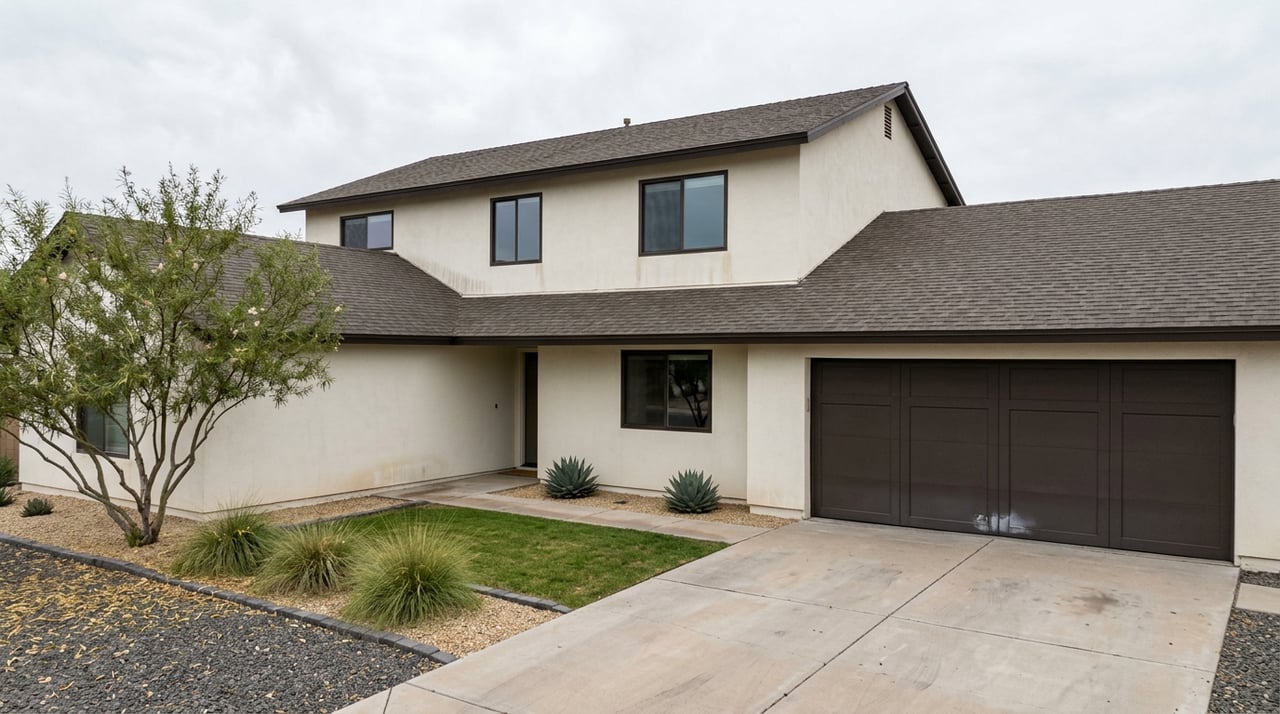
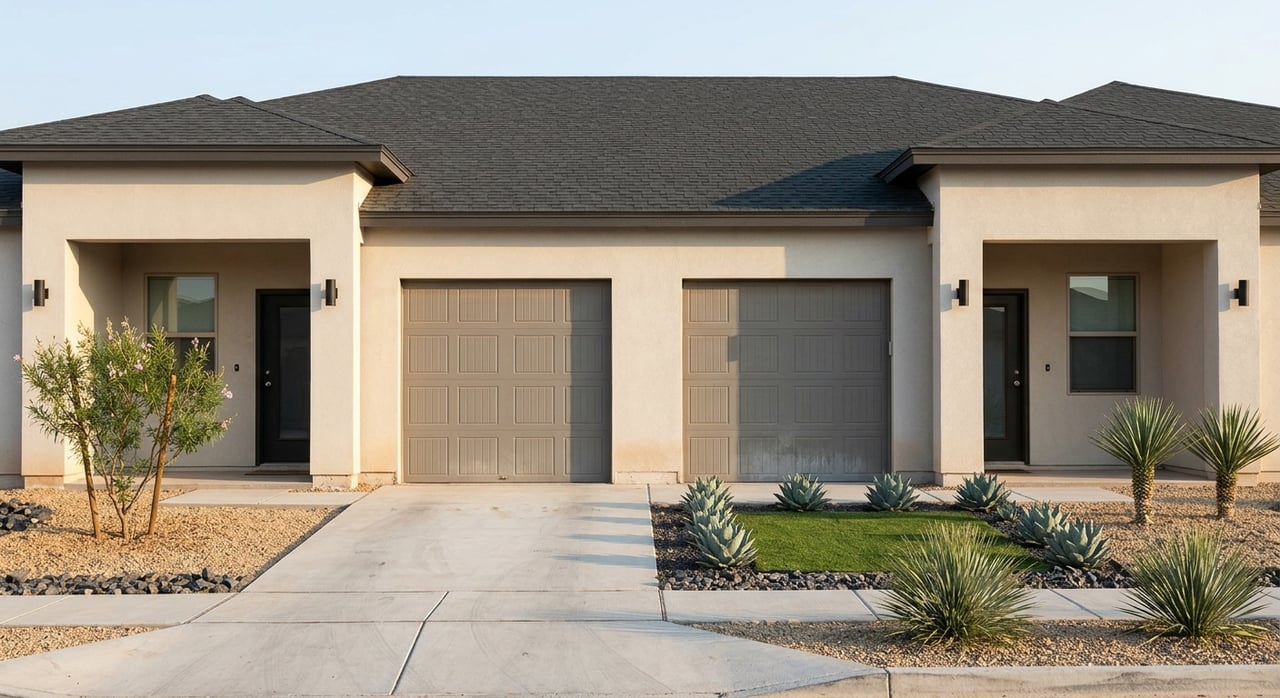
Clovis is still dominated by single-family detached housing. The city’s Comprehensive Plan says much of the community is characterized by single-family detached development, with only a small percentage of multifamily dwellings and some mobile-home areas.
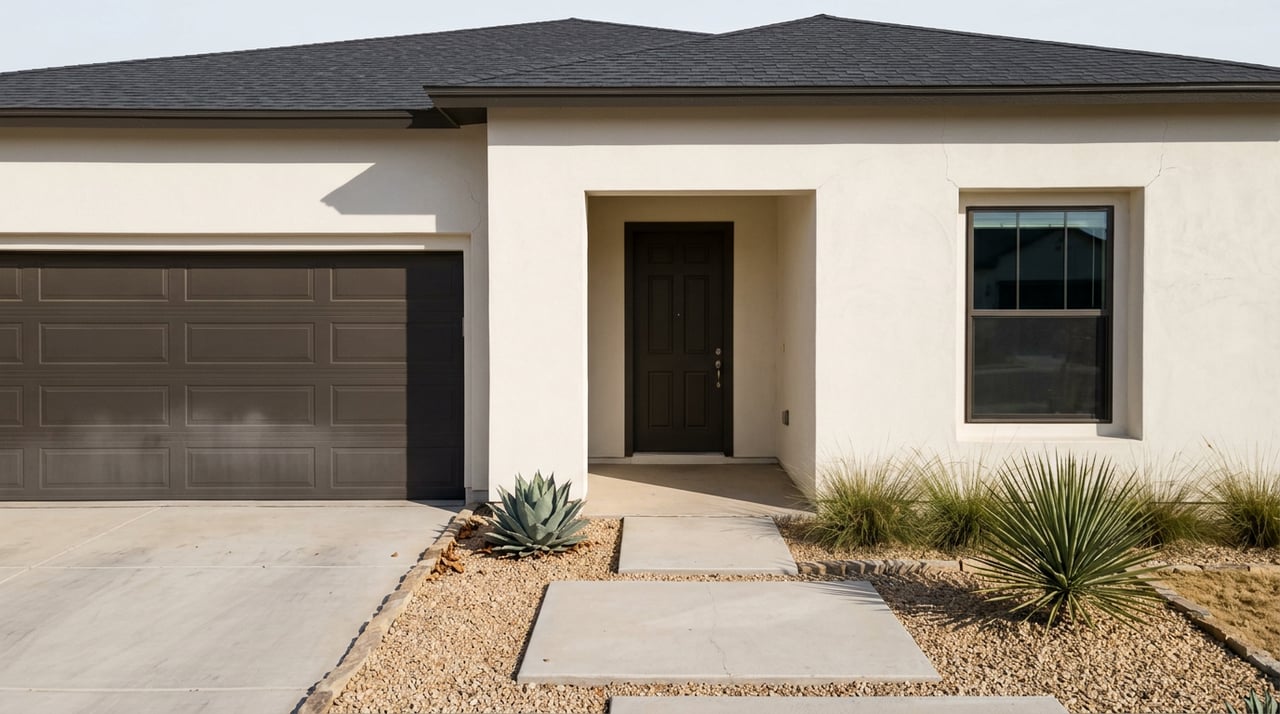
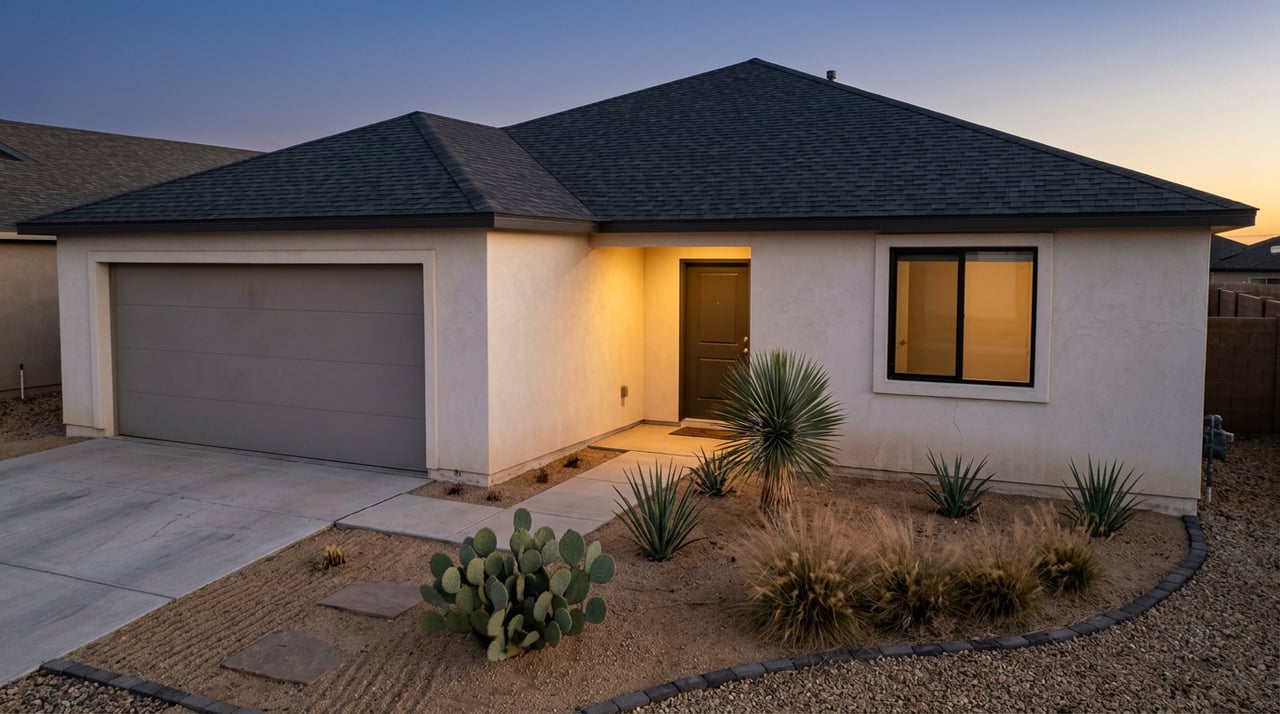
That is one of the most important things a new investor can understand. In Clovis, your first rental is more likely to be a scattered-site single-family house or a small residential property than a large apartment building. If you are looking for a market built around big multifamily complexes, this is generally not that.
Clovis zoning does allow a range of residential formats, including detached houses, duplexes, townhouses, multi-unit houses, and apartments in designated districts. Still, the market functions more like a district-by-district and lot-by-lot environment than a free-form multifamily growth market.
Older Homes Can Be a Good Opportunity
Many Clovis neighborhoods were built between 1950 and 1979, according to the city’s Comprehensive Plan. For investors, that often creates both opportunity and responsibility.
Older homes can offer a more accessible entry point, but they may also come with aging roofs, plumbing, HVAC systems, or electrical components. If you are new to investing, it is smart to budget for more than just the purchase price and cosmetic updates.
A rental that looks inexpensive at closing can become far more expensive if maintenance planning is weak. In Clovis, a careful inspection strategy and a realistic reserve budget are not optional. They are part of how the market works.
Vacancy Has Been Tight Overall
A local feasibility study commissioned for the city shows that Clovis has had a fairly tight rental market overall, even though vacancy has moved around with new supply and lease-up periods. Overall vacancy was 3.8% in 2015, dropped to 1.3% in 2020, rose to 5.2% in 2023, then eased to 3.5% in 2024 and 3.7% year-to-date in 2025.
That pattern is useful because it suggests Clovis has not had a chronic oversupply problem. Instead, vacancy appears to rise more when newer inventory is being absorbed, then settle back down.
The same study found that units built since 2000 had vacancy peak at 10.6% in 2023 during lease-up, then fall to 3.8% in 2025 year-to-date. For you, that means a short-term spike in vacancy does not always signal weak market fundamentals. Sometimes it reflects timing.
Rent Numbers Can Look Confusing
If you research Clovis rents, you may notice that different sources show very different numbers. That is normal here.
U.S. Census QuickFacts lists median gross rent at $988 in Clovis and $1,024 in Curry County. But the 2025 local feasibility study reported effective rent for all units at $1,566, with units built since 2000 averaging $2,078.
Those figures are not necessarily in conflict. Census median gross rent captures a wider mix of housing, including older units and below-market rents, while the feasibility study reflects a private-market effective rent picture. For a new investor, the key lesson is simple: do not use one rent source in isolation when you underwrite a deal.
Know the Price Bands Before You Buy
In practical terms, Clovis looks like a market with multiple rent tiers. Older and more basic units may sit closer to the lower figures reflected in census data, while newer or recently improved product can reach much higher effective rent levels.
That means your renovation plan should match the neighborhood, the property type, and the likely renter profile. Over-improving a property for the local demand pool can hurt returns, while under-improving it may make leasing harder and increase turnover.
For investors considering voucher or income-restricted tenants, HUD’s FY2025 Curry County rent limits are another important benchmark. They are $500 for an efficiency, $667 for a one-bedroom, $805 for a two-bedroom, $973 for a three-bedroom, and $1,246 for a four-bedroom. These are program limits, not market-wide caps, but they matter if you plan to operate in that space.
New Mexico Rules Shape Your Operations
A lot of first-time investors focus on purchase price and rent, but the legal side matters just as much. In New Mexico, landlord-tenant rules create a fairly structured operating environment.
Under Section 47-8-15, if your rental agreement does not set a definite term, the tenancy is generally week-to-week for weekly rent and month-to-month otherwise. Rent is payable without demand or notice. Month-to-month termination generally requires 30 days’ written notice, and late fees are capped at 5% of rent if the lease allows them and notice is timely.
That is a good reminder that your lease paperwork and notice practices need to be handled correctly. For a first-time investor, clean systems matter just as much as a good rent estimate.
Habitability Is a Core Part of Landlording
The New Mexico judiciary’s owner-resident guidance puts maintenance and habitability front and center. Landlords must substantially comply with housing codes, keep common areas safe, and maintain systems such as electrical, plumbing, sanitary, heating, ventilation, air conditioning, running water, hot water, and waste receptacles.
This is especially relevant in a market with many older homes. Deferred maintenance can turn into legal risk, vacancy, and turnover very quickly.
The same guidance explains that tenants can use a seven-day notice if dangerous or unhealthy conditions are not repaired. Other lease issues can trigger 3-day, 7-day, or 30-day notices depending on the situation. For a new investor, this is another reason Clovis is not a hands-off market.
Security Deposits Have Clear Rules
Security deposits are another area where you need to know the rules before you lease your property. Under Section 47-8-18, for leases shorter than one year, the deposit generally cannot exceed one month’s rent.
When a tenancy ends, you may apply the deposit to unpaid rent or legitimate damages, but not normal wear and tear. You also must send an itemized written deduction statement and any remaining balance within 30 days of termination or move-out.
These are not minor details. Missing timelines or handling deposits loosely can create avoidable problems, especially if you are managing from out of town.
Utility Billing and Rehab Rules Matter Locally
Clovis adds a few practical issues that new investors should understand. The city’s Property Owner/Landlord Notification Request explains that sewer and refuse billing can be transferred to the renter, but the balance still defaults to the property. The owner also must notify the city when the tenant moves out.
That means unpaid utility balances can still become your issue if you do not stay on top of move-out procedures. It is one more operational detail that makes local oversight important.
On the rehab side, the city’s Building Safety page says Clovis has adopted the 2021 International Codes and the 2020 National Electrical Code. If you are buying an older property with value-add plans, permit and code compliance should be part of your budget and timeline from day one.
Why Management Matters for New Investors
When you put all of this together, the Clovis rental market starts to look very workable, but not passive. You have a mostly single-family market, meaningful workforce rental demand, military-related mobility, older housing stock, and clear state and local operating rules.
That combination can be a good fit for a new investor who wants steady demand and a practical entry point. But it also means screening, inspections, maintenance coordination, notices, rent collection, and turnover management need to be done consistently.
For absentee owners, first-time landlords, or investors serving Cannon AFB-related moves, local property management can reduce risk and save time. It also helps you think beyond the first lease and plan for the full property lifecycle, from purchase to leasing to eventual resale.
If you want help evaluating a rental property, setting realistic expectations, or building a plan that fits the Clovis market, Katharine Fly can help you move forward with clear local guidance.
FAQs
What type of rental property is most common in Clovis for new investors?
- Clovis is largely a single-family detached housing market, so many new investors start with single-family homes or small residential properties rather than large apartment assets.
What drives rental demand in Clovis, New Mexico?
- Rental demand in Clovis is supported by workforce households and by military-related moves connected to Cannon Air Force Base, which creates recurring need for ready-to-rent housing.
Are Clovis rental vacancy rates high for investors?
- Local study data shows vacancy has moved over time, but the market has generally remained fairly tight overall, with recent swings tied more to lease-up of newer supply than to chronic oversupply.
Why do Clovis rent estimates vary so much by source?
- Census figures reflect a broader mix of rents across older, newer, and below-market units, while local feasibility-study figures are closer to private-market effective rents, so both can look very different.
What legal rules should a new landlord know in Clovis?
- New Mexico rules cover lease terms, notices, late fee limits, habitability duties, and security deposit handling, so first-time investors need solid processes before leasing a property.
Is property management helpful for Clovis rental investors?
- Yes. In a market with older homes, military turnover, local utility procedures, and state notice requirements, professional management can help reduce risk and improve consistency.